Many of the patients I see want the same things: a chip to disappear, a gap to close, or a stain that whitening can't remove to finally go away. Two good options for my Albuquerque patients are porcelain veneers and composite bonding. Both can change a smile, but they work differently, and the right choice depends on your goals, budget, and how long you want the results to last.
After more than 30 years of practicing cosmetic dentistry in Albuquerque, I've found that patients make better decisions when they understand both options up front. Here's how I explain the difference in my office.
The Short Answer
Bonding refines. It's a tooth-colored resin I sculpt directly onto your tooth in a single visit to fix small chips, gaps, and flaws, with no enamel removed.
Veneers transform. They're thin shells of porcelain bonded to the front of your teeth to change their color, shape, and size, with results that can last for years.
Custom Porcelain
Porcelain veneers cover teeth to conceal flaws. Mine are made from IPS e.max®, a durable material that gives them the same lifelike translucency as natural enamel and the ability to resist stains over time. Each veneer is handcrafted by a skilled ceramist to fit your smile.
Creating veneers typically takes about two weeks. At your first visit, I use smile simulation software so you can preview your results before we begin. Next, I remove a thin layer of enamel so the veneers sit naturally, and I take digital impressions. Once your veneers come back from my lab, I check every detail myself. If the fit, shade, or shape isn't right, they go back to the lab until they are.
Veneers are a strong choice for patients who want to:
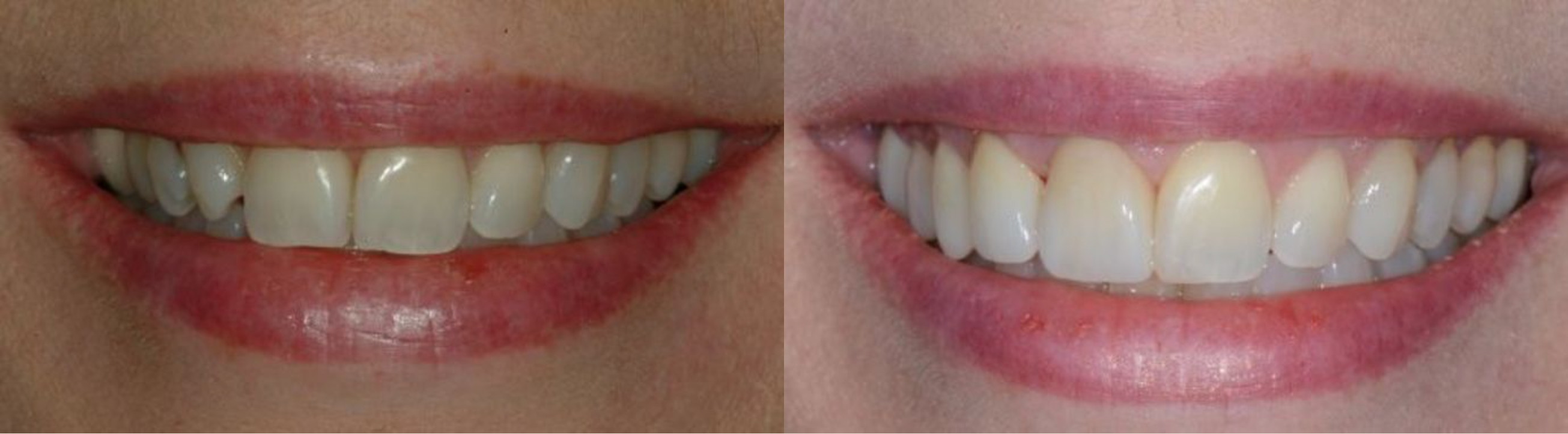
Before Veneers
After veneers
Hand-Sculpted Resin
Composite bonding is a tooth-colored resin that I apply directly to a tooth and shape by hand. First, I match the resin to your natural enamel. Then I gently etch the surface of the tooth so the material grips well, apply the resin, and sculpt it into the shape we want. A special light hardens it, and I finish by polishing it so it blends in with your surrounding teeth.
Most bonding appointments take less than an hour, and you leave the same day with your new smile. I don't need to remove enamel or reshape the tooth, so bonding is a fairly conservative cosmetic treatment. It's also one of the most affordable.
I often recommend dental bonding for Albuquerque patients who want to address:
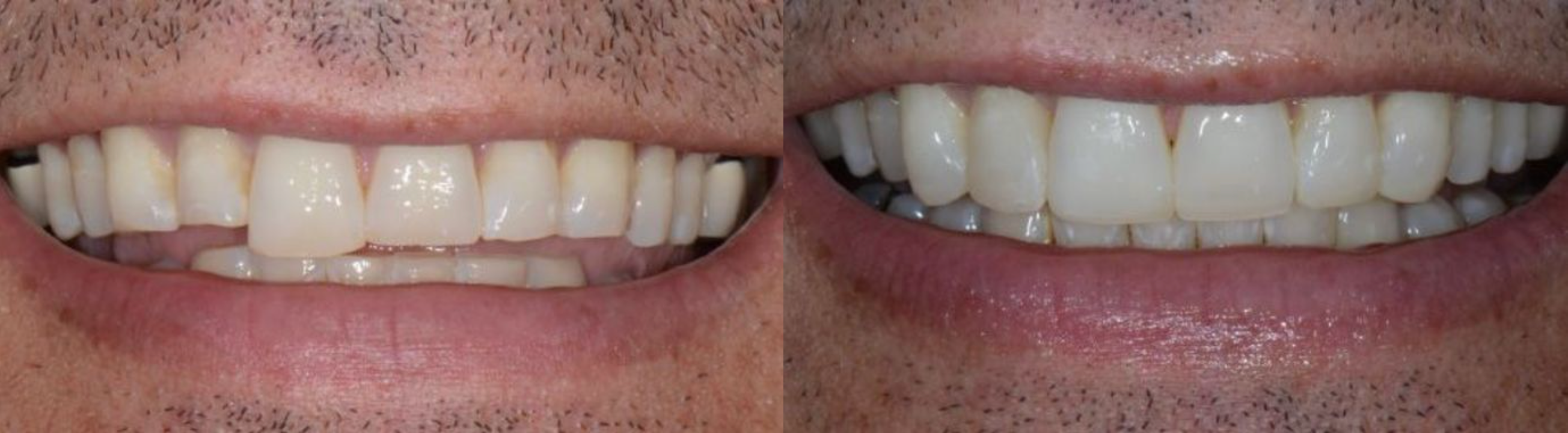
Before Bonding
After Bonding
Side by Side
Watch & Learn
In this video, I explain the difference between porcelain veneers and dental bonding (sometimes called composite veneers). Porcelain veneers are made from scans of a patient’s smile over two appointments. Bonding consists of resin shaped to the tooth in a single appointment.
Explore each treatment in more detail, or schedule a visit and I'll help you compare them for your goals and budget.
Cost & Longevity
Dental bonding is one of the most affordable cosmetic treatments I offer, and it usually costs substantially less per tooth than porcelain veneers. Veneers are considered elective, so dental insurance doesn't cover them. Bonding is often cosmetic too, but when it repairs damage like a chipped or cracked tooth, your insurance may cover part of the cost. For either treatment, my team can check your benefits and explain our in-office 90-day financing or CareCredit®.
Porcelain veneers typically last 10–15 years and hold their color because the porcelain resists stains. Composite resin is softer, so bonding usually needs a touch-up or replacement sooner, often within 5–7 years, and it can pick up stains from coffee, tea, or red wine. I can help you select the best choice for your goals and budget.
Common Questions
Bonding is usually painless. Because I don't remove any enamel, most patients don't need anesthesia at all. For veneers, I numb the area before removing a thin layer of enamel, so you'll feel pressure but not pain. Some patients notice mild sensitivity for a few days afterward, but it fades on its own.
No. Whitening gel doesn't change the color of composite resin or porcelain. If you're thinking about whitening, I recommend doing it before treatment so I can match your bonding or veneers to your brighter shade.
Yes. Many patients start with bonding because it's conservative and affordable, then choose veneers when they're ready for a longer-lasting result. Since bonding leaves your enamel intact, switching to veneers is possible. However, it doesn't work the other way around: once a tooth is prepared for a veneer, it will always need some kind of restoration.
Yes. Some smiles benefit from both. For example, I might place veneers on your most visible front teeth and use bonding to repair a small chip on a tooth farther back. I offer full smile makeovers in Albuquerque that can combine multiple procedures into a single streamlined plan to address all your concerns. During your consultation, I can build a plan that fits your goals and budget.
Whether a quick bonding visit or a set of custom porcelain veneers is right for you, I would be glad to help you choose. Come see why Albuquerque has trusted me with their smiles since 1992.
Or call (505) 881-7586